People / Process / Systems / A stronger tomorrow

Office / Track record
03 / Track record
The result has to appear in the work.
The following examples are anonymised. They show the kind of problems solved inside operational businesses — from production constraints to missed growth opportunities.
These results were achieved before the current fractional CTO service was formalised, but they illustrate the underlying approach Curavest applies across its services.
01 — Doubling output without additional investment
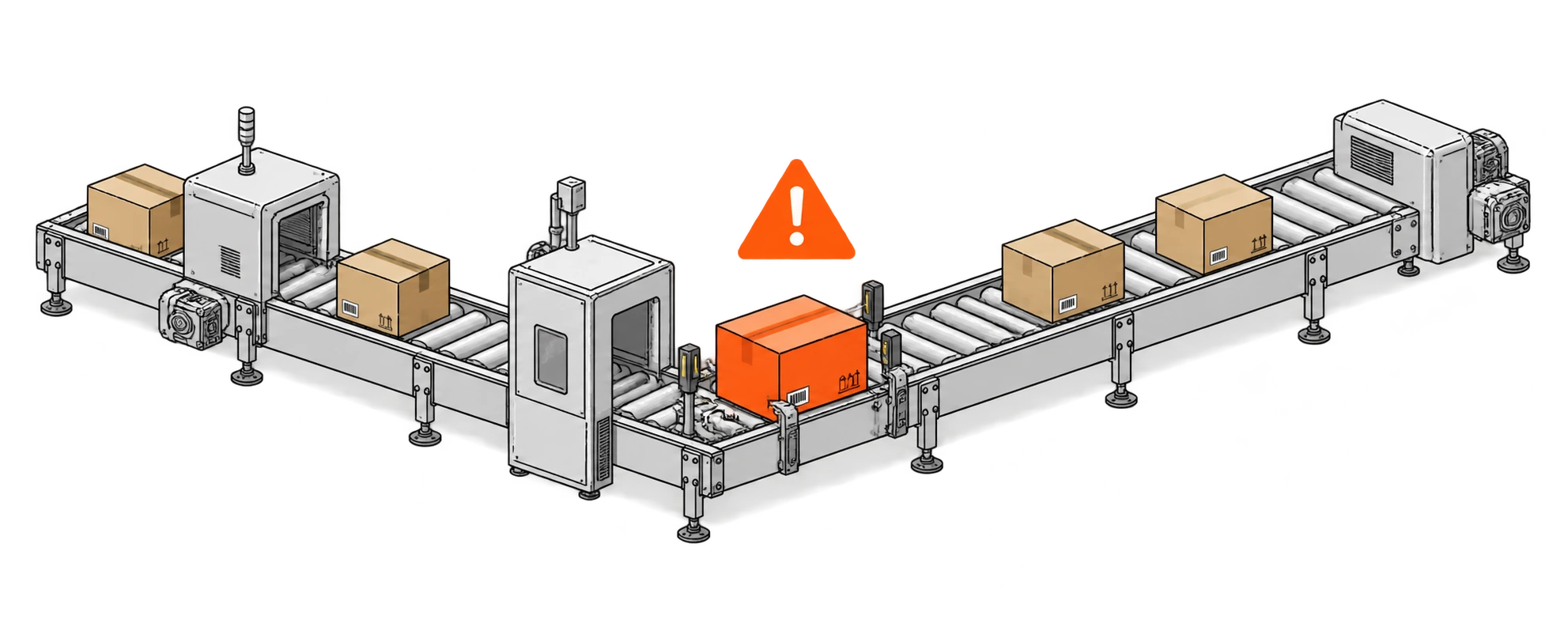
CV-TR-01An assembly department had become a bottleneck. The issue was putting pressure on the wider business, but adding resources was not the immediate answer.
The department was diagnosed at the level of the actual work. The constraint was identified, the process was changed and responsibility was taken for making the improvement work.
Within six months, output had doubled with no additional investment.
What this demonstrates: the ability to move from a visible operational problem to a practical fix that improves performance without automatically adding cost.
| Assembly output | Index |
|---|---|
| Before | 100% |
| Within 6 months | 200% |
| Additional investment | None |
02 — From three customers to twenty-eight
CV-TR-02A business needed more than a sales push. It needed a way to move consistently from winning work to delivering it.
The sales-to-delivery process, product design, customer relationship management and reporting mechanism were built from scratch.
The business grew from three regular paying customers to twenty-eight in eighteen months.
What this demonstrates: growth depends on the process behind the sale. Without a reliable path from customer need to delivery, additional demand can create more problems than value.
| Regular paying customers | Count |
|---|---|
| Start | 3 |
| 18 months later | 28 |
03 — More than 50% above the documented machine maximum
CV-TR-03A production machine was operating within an accepted ceiling. The assumption was that the ceiling represented a technical limit.
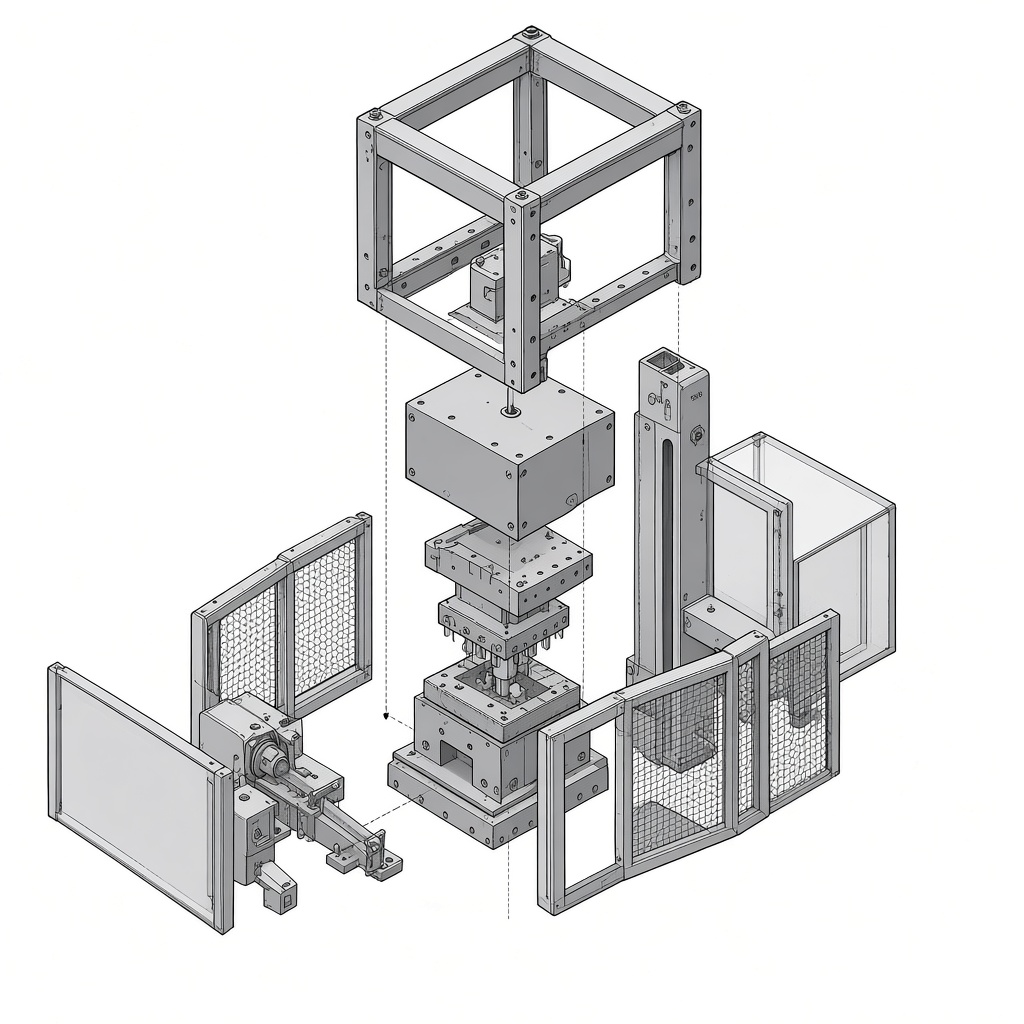
The machine was examined directly. The point of resistance was diagnosed by taking the equipment apart, filming the operation in slow motion and working through the movement manually.
The result was output more than 50% above the documented machine maximum, while maintaining higher-than-expected quality. A three-year production programme was delivered in eighteen months.
What this demonstrates: operational improvement often begins by testing an accepted limit rather than treating it as a fact.
| Output vs documented max | Index |
|---|---|
| Documented maximum | 100% |
| Achieved | 150%+ |
| Programme | 3 years in 18 months |
04 — Turning an overlooked safety problem into a new service
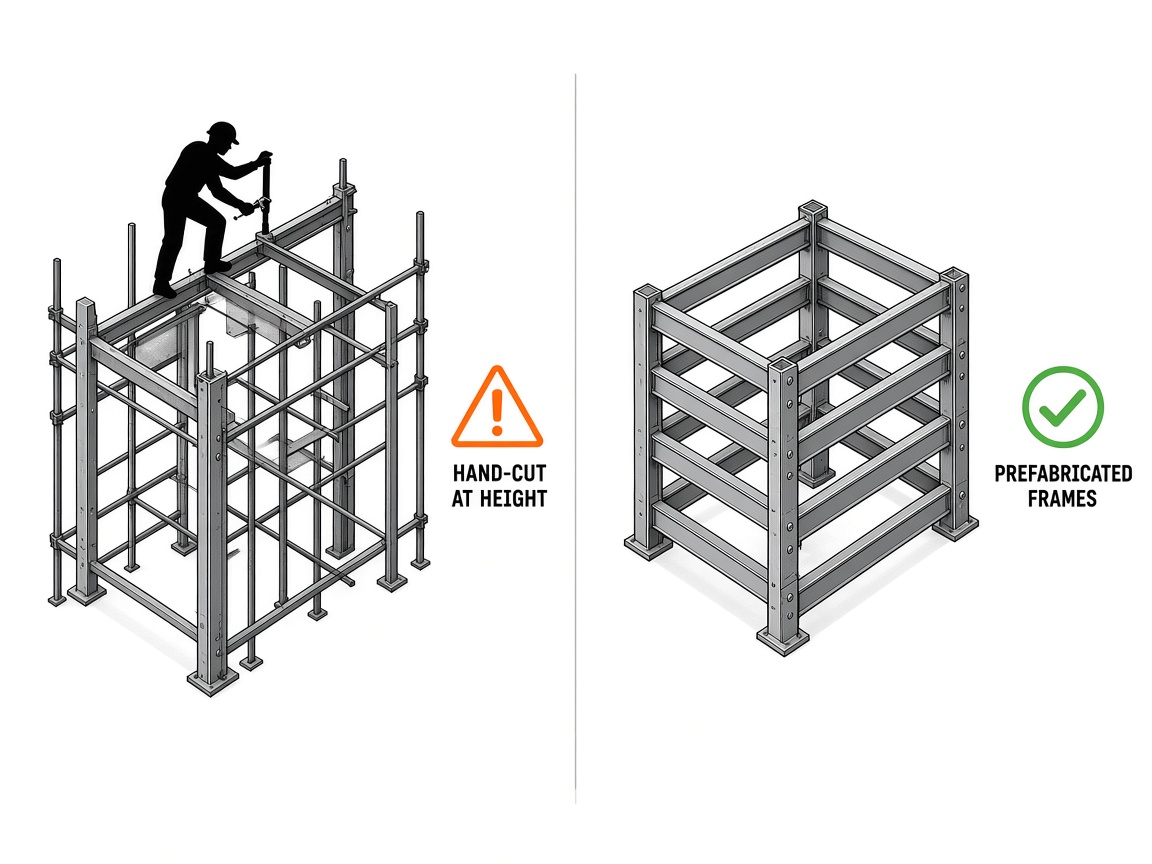
CV-TR-04Site engineers were cutting and assembling support frames by hand at height. This created safety risk and took time away from more valuable work.
Prefabricating the frames was proposed, despite initial pushback. Design software investment was recommended before demand had fully materialised.
The resulting service grew to roughly a quarter of the company’s turnover. Competitors later followed the same direction.
What this demonstrates: close attention to how customers actually work can reveal a commercial opportunity they have not yet articulated.
| New service share of turnover | ~25% |
05 — Reducing quote turnaround from hours to minutes
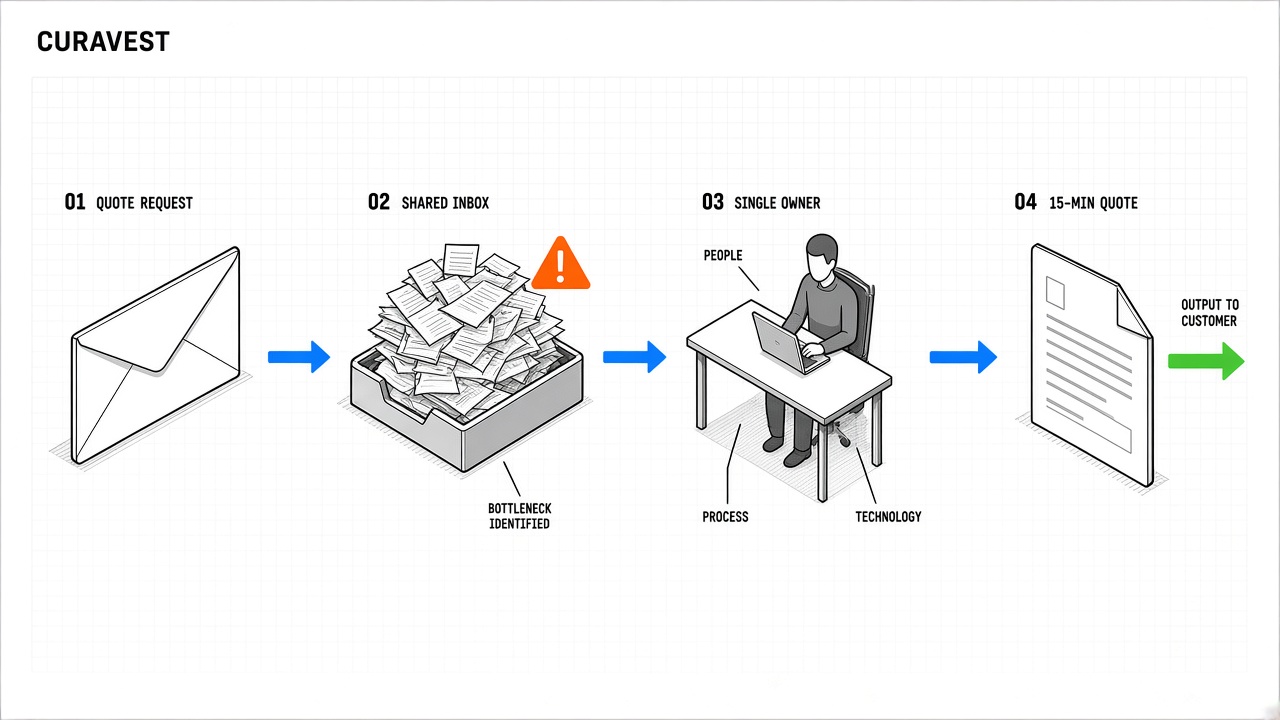
CV-TR-05A construction supply business was taking between two and three hours to return some quotes.
The delay was not caused by a lack of effort. Requests were sitting unmanaged in a shared inbox, while responsibility was split between five or six people.
A new process gave one person ownership from beginning to end. A tool then generated most of the quote automatically.
Average turnaround fell to approximately fifteen minutes.
What this demonstrates: automation is most effective after the process has been clarified and ownership has been established.
| Average quote turnaround | Minutes |
|---|---|
| Before | 150 |
| After | 15 |
No case study is a substitute for understanding your business. If the examples above resemble the pressure you are facing, start a conversation about the specific constraint.
Start with the problem.
A pragmatic conversation about your business, your challenges and what is possible.
Start a conversation →